Hot Water System Buyer’s Guide
Choosing the Right Hot Water System for Your Home
Replacing your hot water system doesn’t need to be complicated.
Whether your current unit has failed or you’re planning an upgrade, this guide will help you understand your options.
We’ll explain the differences between gas storage, continuous flow, heat pumps and electric systems. You’ll also learn what affects installation costs and when changing to a different system makes sense.
Our focus is on practical, reliable hot water solutions for Perth homes.
On this Page
Start With Your Existing Hot Water System
When replacing a hot water system, the most practical option is often to install a similar unit.
Your home already has plumbing, gas or electrical connections designed for its existing system. Reusing suitable infrastructure can help keep installation costs down.
However, a replacement is also an opportunity to consider a different technology, particularly if you’re looking to reduce energy costs or move away from gas.
Gas Storage
A modern gas storage system is often the simplest and most affordable replacement for an existing gas storage unit. A heat pump is also worth considering if you’re exploring alternatives to gas.
Continuous Flow Gas
If your home already has continuous flow gas hot water, replacing it with a suitable modern unit is generally straightforward. Converting from gas storage can be more involved.
Electric Storage
Replacing an existing electric storage system may be practical, although electrical work must be arranged. A heat pump may offer lower running costs, depending on your electricity tariff and household usage.
Solar Hot Water
Older solar hot water systems deserve individual assessment. Depending on their condition and installation, replacing the system or switching to a heat pump may be worth considering.
Compare Your Hot Water Options
Choosing a new hot water system involves more than comparing purchase prices. Running costs, installation requirements and your household’s hot water needs all matter.
Here are three common options worth considering.
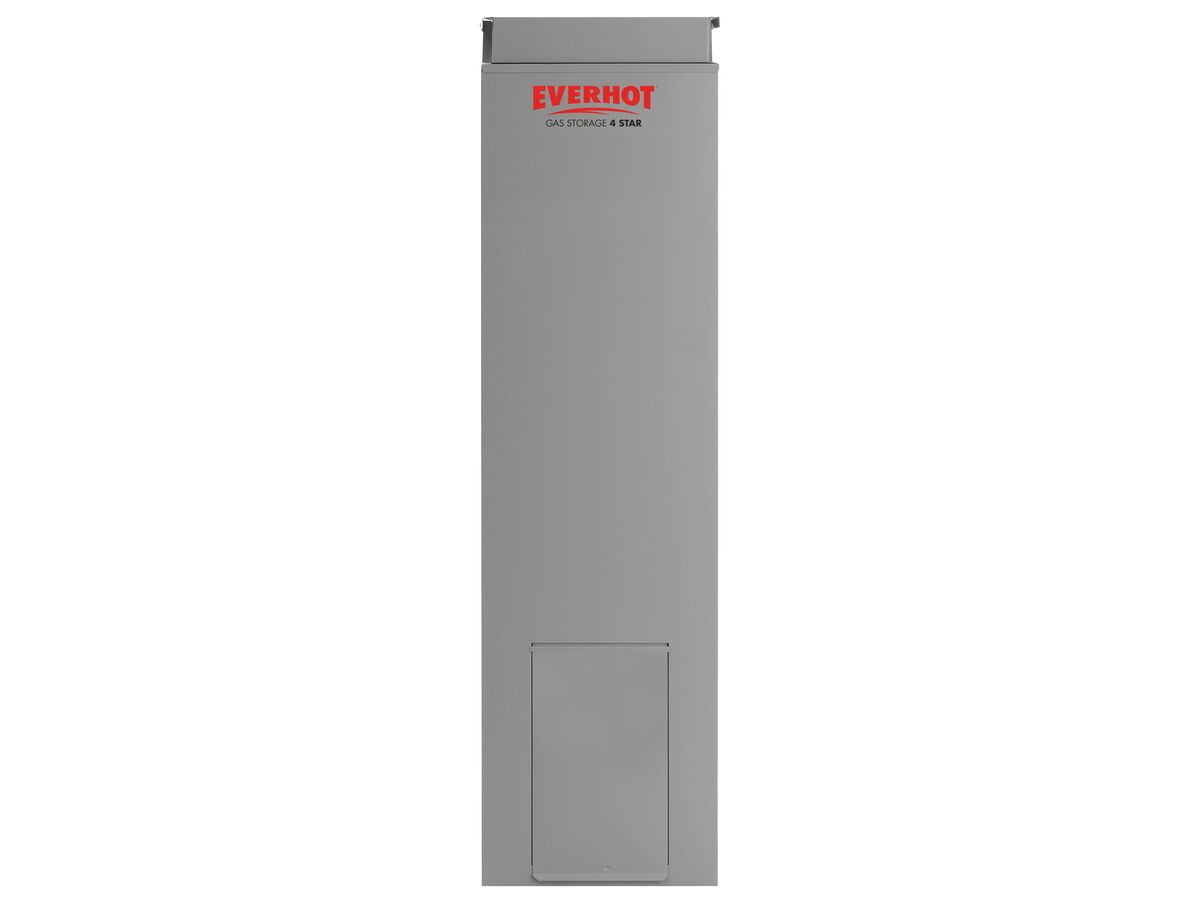
Gas Storage Hot Water
A practical, affordable replacement for existing gas storage systems.
Gas storage systems heat water in a tank, keeping it ready for use throughout the day.
Replacing an existing gas storage heater with a modern equivalent is often the lowest-cost option upfront. Installation is usually straightforward when the existing connections and location are suitable.
Best suited to: Homeowners wanting a reliable, cost-effective replacement without changing their existing hot water setup.
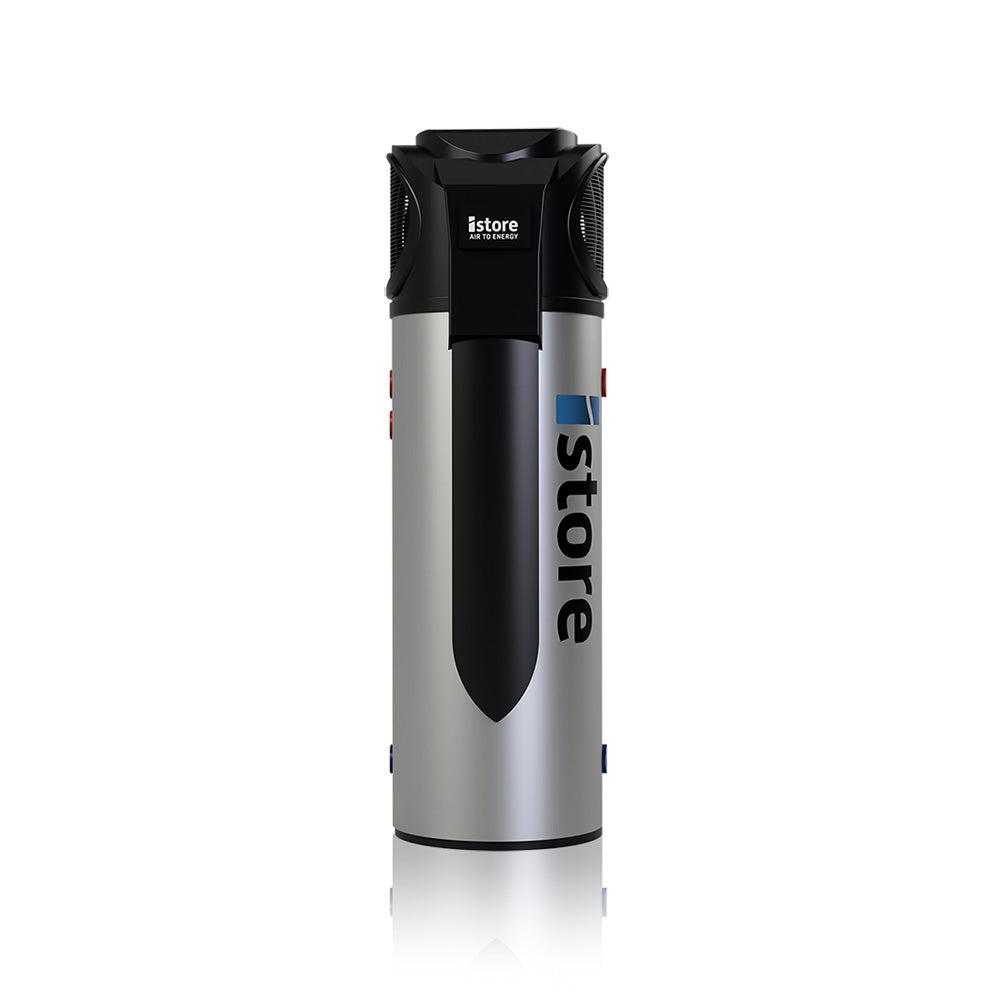
Heat Pump Hot Water
An energy-efficient alternative with potential long-term savings.
Heat pumps use electricity to extract warmth from the surrounding air and heat water efficiently.
They generally cost more to purchase and install than a basic gas storage replacement. However, their lower energy consumption can make them attractive over the longer term.
They are particularly worth considering if you have rooftop solar panels or are planning gas abolishment.
Best suited to: Homeowners looking to reduce energy consumption and willing to invest more upfront.
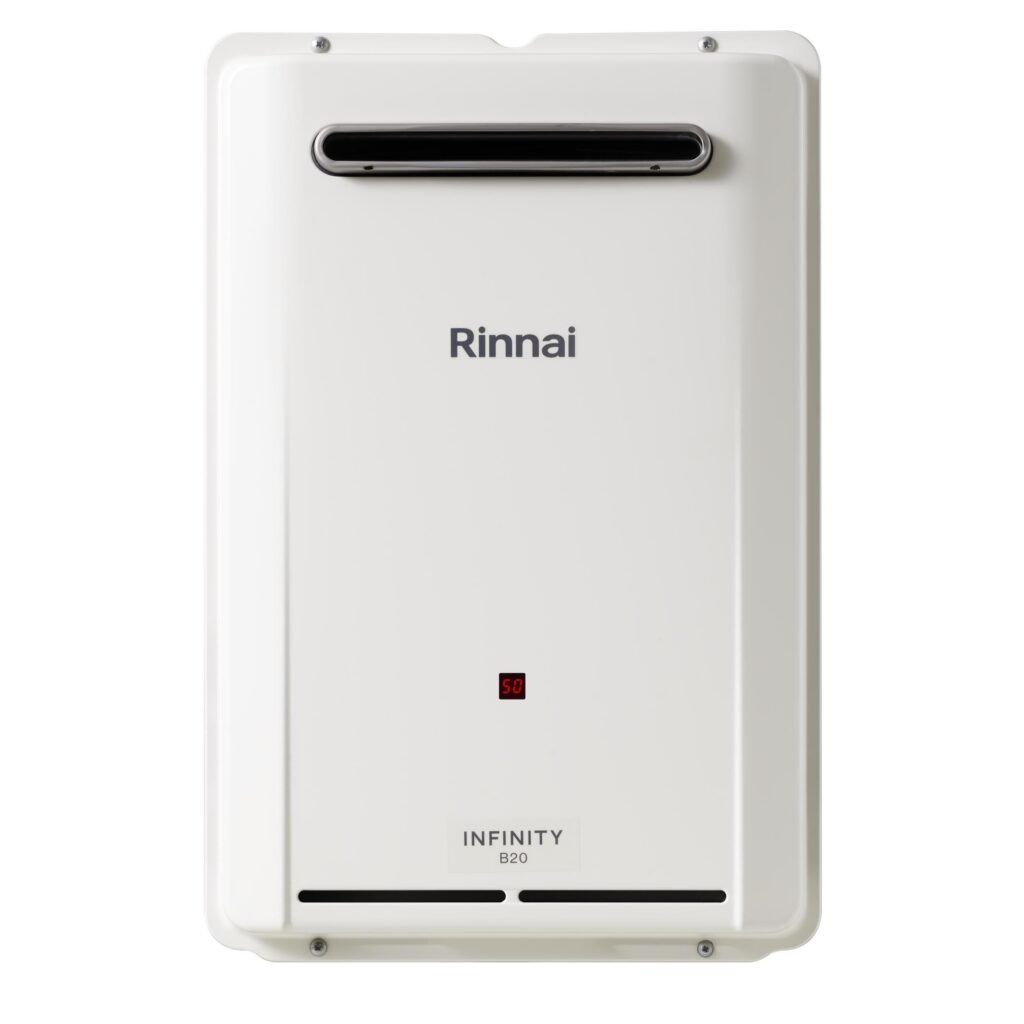
Continuous Flow Gas Hot Water
Compact, on-demand hot water without a storage tank.
Continuous flow systems heat water as it passes through the unit, rather than storing it in a tank.
They provide hot water for as long as the system has an adequate gas and water supply. The correct model must be selected to suit your household’s expected simultaneous demand.
Replacing an existing continuous flow unit is generally more straightforward than converting from gas storage.
Best suited to: Homes already using continuous flow gas hot water.
What About Electric Storage and Solar Hot Water?
Electric storage remains a practical option for some existing installations. However, running costs depend heavily on electricity tariffs, usage and available solar power.
Traditional solar hot water systems can also perform well, although replacement costs and installation complexity vary.
We’ll look at both options later in this guide.
Gas Storage Hot Water Systems
Gas storage remains a practical and affordable choice for Perth homeowners replacing an existing gas storage water heater.
These systems heat and store water in an insulated tank, ready for use throughout the day. As hot water is used, the gas burner reheats the incoming cold water.
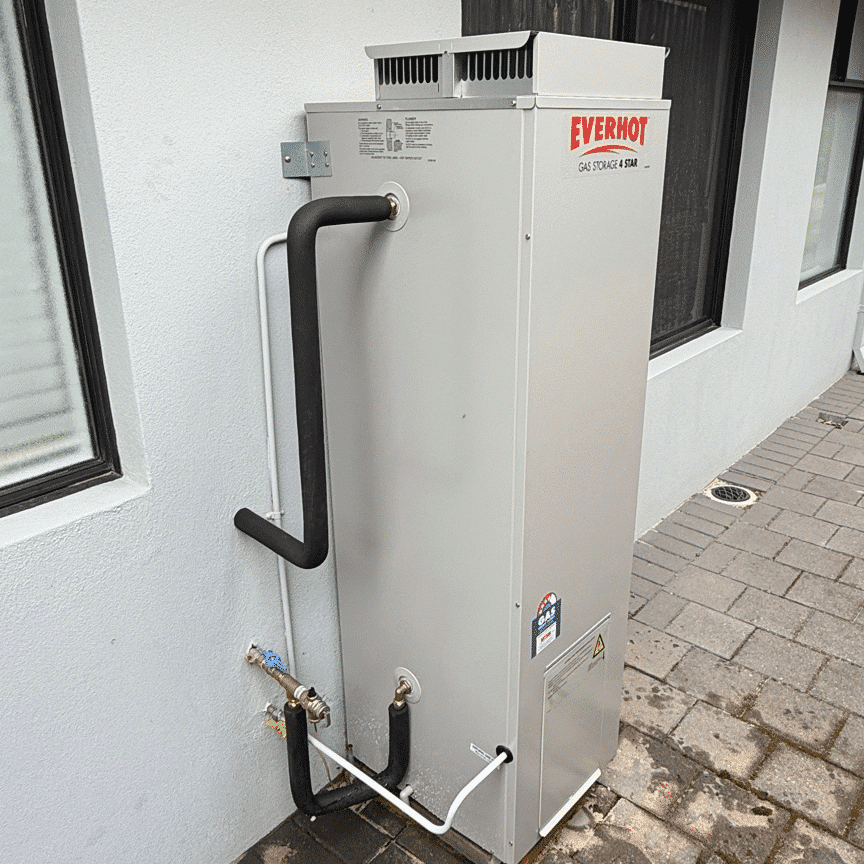
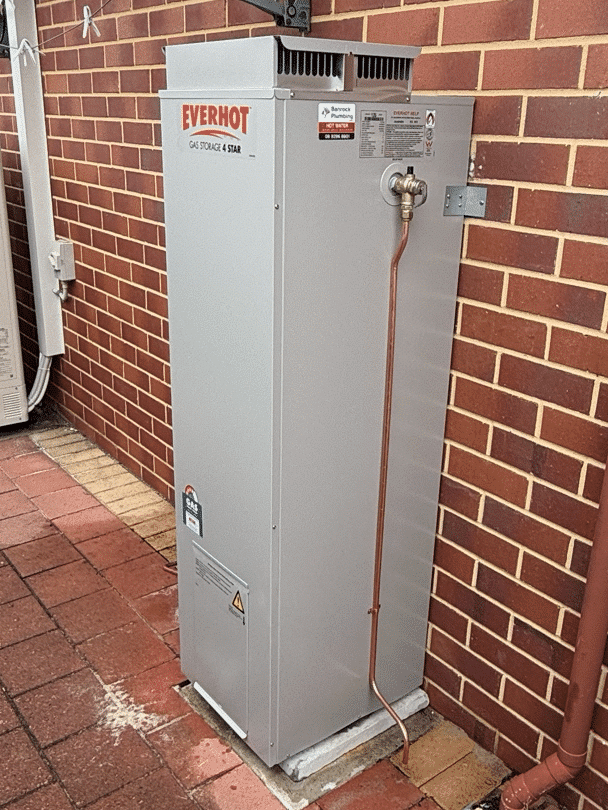
Modern 4-star gas storage systems offer improved energy efficiency compared with older 3-star models. They are often a straightforward replacement without major changes to existing plumbing.
Why Choose Gas Storage?
- Affordable replacement: Often the lowest upfront cost when replacing an existing gas storage system.
- Proven technology: A simple, familiar hot water solution.
- Good recovery: Gas burners can reheat stored water relatively quickly.
- Straightforward installation: Existing connections can often be reused when suitable.
How Much Does Gas Storage Replacement Cost?
As a guide, a typical Everhot 135L 4-star natural gas storage replacement costs approximately $2,495 supplied and installed, including GST.
This indicative price covers a straightforward replacement under normal installation conditions.
Difficult access, additional plumbing or compliance work, and larger systems may increase the final cost.
Is Gas Storage Right for You?
If your existing gas storage system has failed and you’re happy to continue using natural gas, replacing it with a similar model is often the simplest solution.
However, if you’re considering gas abolishment or have rooftop solar panels, it’s worth comparing the longer-term benefits of a heat pump before deciding.
Heat Pump Hot Water Systems
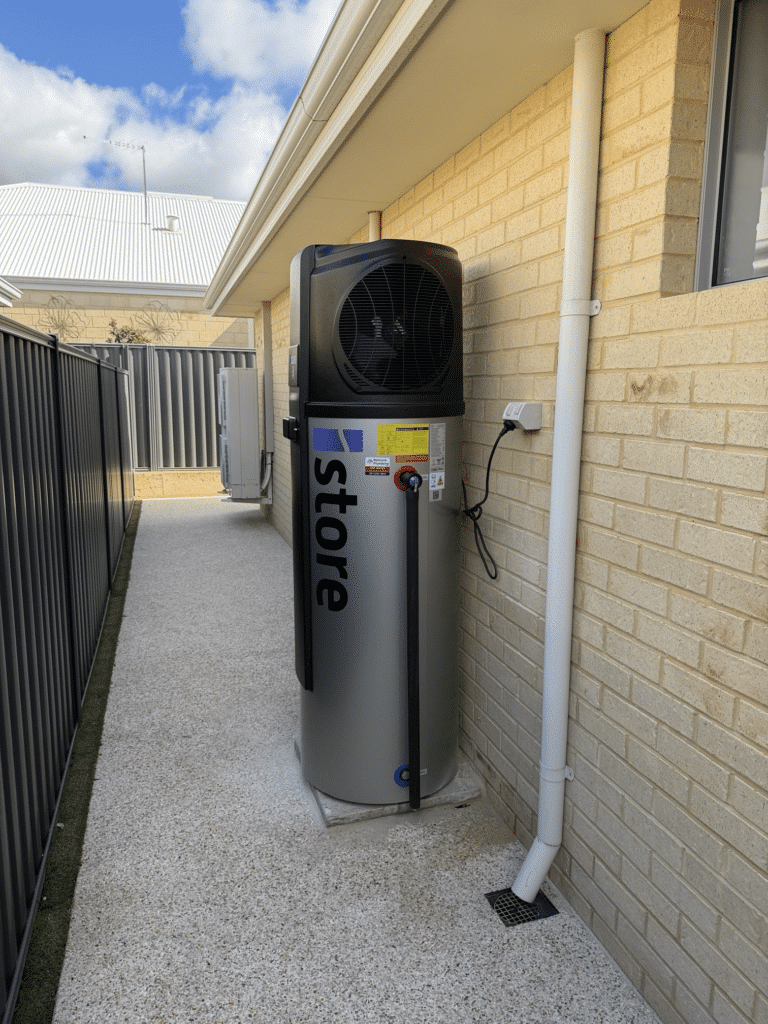
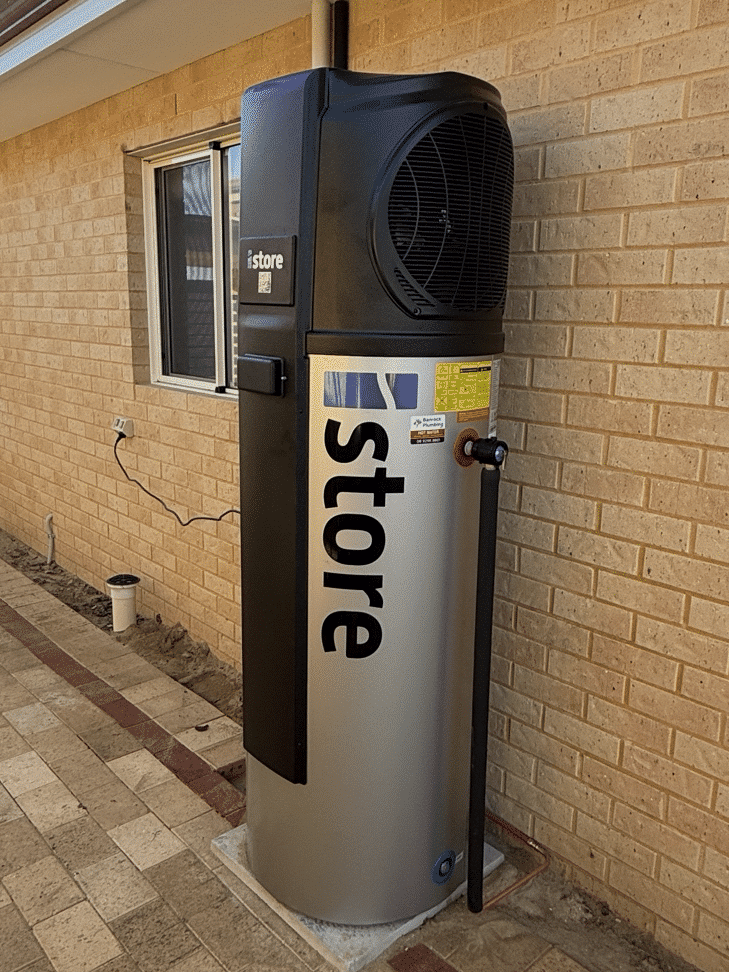
Heat pump hot water systems are an energy-efficient alternative to traditional gas and electric storage heaters.
Rather than generating heat directly, they extract warmth from the surrounding air and transfer it into a storage tank. This allows them to heat water using considerably less electricity than conventional electric storage systems.
Although heat pumps generally cost more upfront, their lower energy consumption can make them a worthwhile long-term investment.
Why Choose a Heat Pump?
- Energy efficiency: Uses significantly less electricity than conventional electric resistance heating.
- Solar compatibility: Can use electricity generated by rooftop solar panels to help reduce running costs.
- Gas abolishment: Offers an alternative to gas hot water for households looking to eliminate their gas connection.
- Long-term value: Lower running costs can help offset the higher initial purchase price.
Heat Pumps and Rooftop Solar
Heat pumps are particularly attractive for households with solar PV systems.
Many models can be scheduled to heat water during daylight hours, taking advantage of available solar generation.
This effectively stores some of your solar energy as hot water for use later in the day.
Are Heat Pumps Worth the Extra Cost?
The answer depends on your household’s circumstances.
Your existing hot water system, energy tariffs, solar generation and daily hot water consumption all influence potential savings.
For some homeowners, replacing an existing gas storage heater remains the most economical immediate solution. For others, a heat pump offers better value over the longer term.
We generally recommend comparing both options before making a decision.
Explore our Heat Pump Hot Water Systems Guide →
Continuous Flow Gas Hot Water Systems
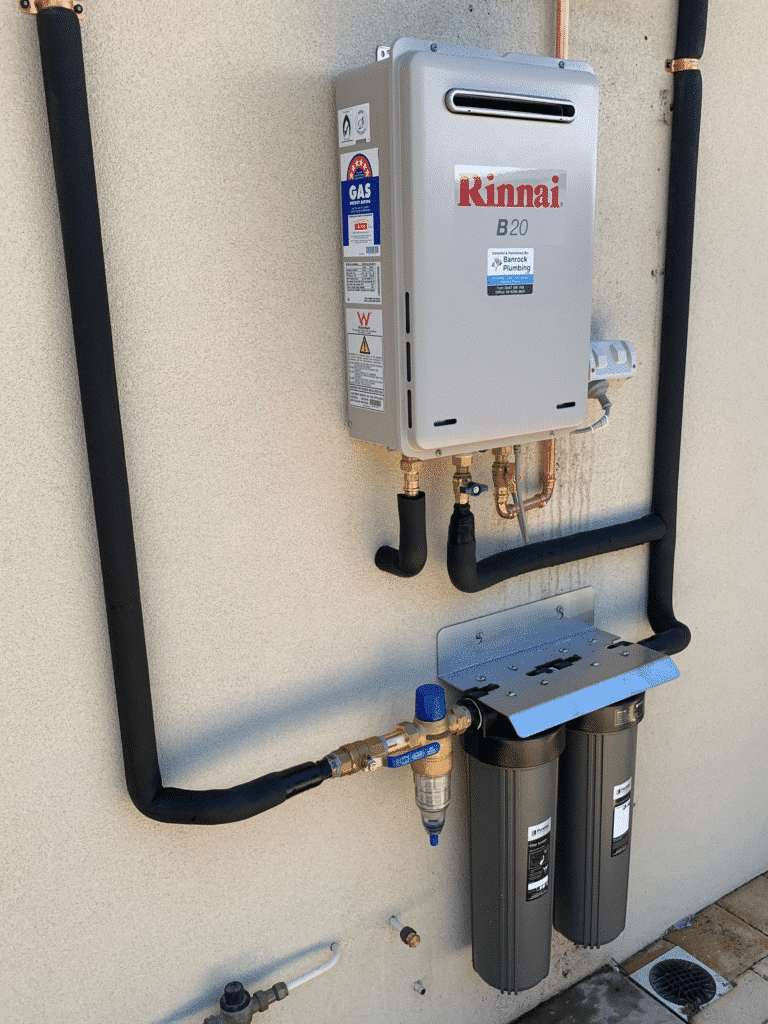
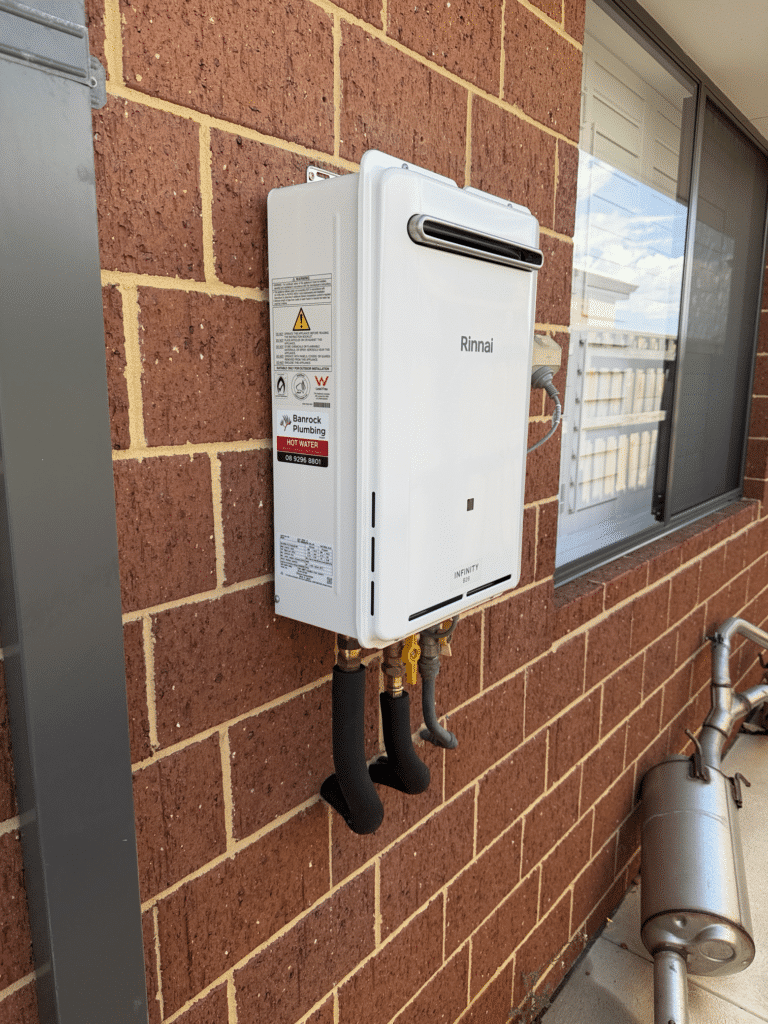
Continuous flow gas hot water systems, sometimes called instantaneous water heaters, heat water as you need it.
Unlike storage systems, they don’t keep a tank of hot water ready throughout the day. Instead, a gas burner activates when you open a hot water tap.
These compact, wall-mounted systems are particularly well suited to homes already using continuous flow gas hot water.
Why Choose Continuous Flow Gas?
- Hot water on demand: Heats water as needed, without relying on a storage tank.
- Compact design: Wall-mounted units occupy considerably less space than storage tanks.
- No stored hot water to run out: Hot water continues flowing while the system operates within its capacity.
- Efficient operation: Avoids the standing heat losses associated with storing hot water.
Choosing the Right Size
Continuous flow systems are commonly available in 16, 20 and 26-litre models.
These ratings indicate how much water the unit can heat per minute under specified temperature conditions.
The right size depends on your household’s hot water demand, particularly how many showers or taps might operate simultaneously.
A smaller unit may suit a single-bathroom home, while larger households often benefit from greater flow capacity.
Replacing Gas Storage With Continuous Flow
Converting from gas storage to continuous flow isn’t always straightforward.
Continuous flow systems can require significantly higher gas flow rates. Existing gas pipework may need upgrading to support the new appliance.
Additional installation work can make conversion considerably more expensive than a straightforward gas storage replacement.
For this reason, we generally recommend continuous flow systems for homes that already use this technology.
Learn more about Continuous Flow Gas Hot Water Systems →
Electric Storage Hot Water Systems
Electric storage systems heat water using electric heating elements inside an insulated tank.
They remain a practical option for many Australian households, particularly when replacing an existing electric storage heater.
However, conventional electric storage systems generally use more electricity than heat pumps to produce the same amount of hot water.
When Does Electric Storage Make Sense?
A like-for-like replacement may be suitable when existing plumbing and electrical connections are compatible.
Running costs depend on factors such as electricity tariffs, hot water usage and whether the system operates during off-peak periods.
Installation Considerations
Hardwired electric storage systems require a licensed electrician to disconnect the existing unit and connect the replacement.
The availability of electrical trades can affect installation timeframes, particularly when hot water is needed urgently.
For homeowners considering a longer-term upgrade, a heat pump may be worth comparing before replacing an older electric storage system.
Solar Hot Water Systems
Traditional solar hot water systems use roof-mounted collectors to capture heat from the sun and transfer it to water stored in a tank.
Many systems also include an electric or gas booster to provide hot water when solar heating is insufficient.
Solar hot water can work well in Perth’s sunny climate. However, installation costs, roof access and the condition of existing components can influence replacement decisions.
Replacing an Older Solar Hot Water System
If your existing solar hot water system needs major repairs or replacement, it’s worth considering the alternatives.
Modern heat pumps offer an efficient way to heat water without requiring roof-mounted solar thermal collectors.
For households with rooftop solar panels, a heat pump can also use electricity generated during daylight hours.
Which Option Makes More Sense?
The best choice depends on your existing system, roof configuration, household hot water requirements and budget.
Traditional solar thermal systems remain a viable technology. However, a heat pump may provide a simpler alternative, particularly when replacing an ageing system with expensive or difficult-to-access components.
Should You Repair or Replace Your Hot Water System?
A faulty hot water system doesn’t always need replacing. Sometimes a straightforward repair can restore reliable hot water for a fraction of the cost of a new unit.
However, investing in major repairs on an ageing system may not be the most economical decision.
The right choice depends on the fault, the condition of the system and its likely remaining service life.
When Is Repair Worth Considering?
Repairs can be good value when the storage tank and major components remain in sound condition.
Common repairable problems on gas storage systems include:
- Faulty tempering valves
- Leaking isolation or pressure relief valves
- Thermocouple and gas control faults
- Leaking external pipework and fittings
- Anode replacement as part of appropriate maintenance
These problems don’t necessarily mean the entire hot water system has reached the end of its life.
When Is Replacement the Better Option?
Replacement becomes more attractive when the storage tank itself has failed or major repairs approach the cost of a new system.
Age is another important consideration.
For example, spending several hundred dollars repairing a gas storage heater that’s already around 15 years old may offer limited long-term value.
However, age alone doesn’t determine whether a system should be replaced. Its condition, repair costs and your circumstances all matter.
What About Continuous Flow and Heat Pump Repairs?
Modern continuous flow gas heaters and heat pumps contain specialised components that may require manufacturer-authorised technicians or other qualified specialists.
Some plumbing-related faults can still be addressed without replacing the entire system.
Where specialist repairs are needed, we’ll help you understand whether further investigation or replacement is the more practical option.
Making an Informed Decision
We believe it’s worth understanding the likely repair cost before committing to a new hot water system.
Where a practical repair is available, we’ll consider it alongside replacement so you can make an informed decision.
How to Choose the Right Hot Water System for Your Home
The best hot water system isn’t necessarily the most expensive or energy-efficient model. It’s the one that suits your home, household and budget.
Before choosing a replacement, consider these six factors.
1. Your Existing Hot Water System
Your existing installation is usually the best starting point.
Replacing a system with a similar model can reduce installation costs by allowing suitable plumbing, gas and electrical connections to remain in use.
Changing technologies may offer benefits, but additional installation requirements need to be considered.
2. Household Size and Hot Water Usage
The number of people in your home is important, but so is how you use hot water.
A household with several bathrooms operating simultaneously may have different requirements from a similarly sized family that uses hot water at different times.
Choosing the right storage capacity or continuous flow rate helps ensure your system meets everyday demand.
3. Upfront Installation Cost
Compare the total installed price rather than the purchase price of the water heater alone.
Installation costs can vary depending on access, pipework, electrical requirements and whether you’re changing from one technology to another.
A straightforward replacement is often considerably cheaper than a system conversion.
4. Ongoing Running Costs
The cheapest system to install isn’t always the cheapest to operate.
Energy consumption, gas and electricity tariffs, maintenance and household usage all affect long-term costs.
A higher-efficiency system may justify its initial cost through ongoing savings, depending on your circumstances.
5. Solar Panels and Future Energy Plans
If your home has rooftop solar PV, a heat pump may help you use more of the electricity you generate.
Likewise, if you’re considering gas abolishment, your hot water system is an important part of that decision.
Planning ahead can help avoid replacing a gas appliance shortly before deciding to disconnect gas altogether.
6. How Quickly You Need Hot Water
When your existing system fails, availability and installation timeframes can become just as important as efficiency.
A straightforward replacement using a readily available model may restore hot water sooner than a system requiring additional electrical or plumbing work.
If you’re planning an upgrade before your current system fails, you’ll generally have more flexibility to compare options and schedule installation.
Straightforward Advice, Practical Recommendations
Choosing a new hot water system shouldn’t mean sorting through dozens of models or paying for features you don’t need.
We believe the best starting point is understanding your existing system, household requirements and budget.
From there, we recommend a suitable replacement and explain any alternatives worth considering.
Start With a Practical Solution
For many homeowners, a straightforward replacement offers the best balance of price, reliability and convenience.
If your existing gas storage system can be replaced with a suitable modern equivalent, we’ll generally start by discussing that option.
This establishes a realistic starting price before considering more expensive alternatives.
Consider the Long-Term Value
Sometimes spending more upfront makes sense.
A heat pump, for example, may offer worthwhile long-term savings, particularly for households with rooftop solar panels or plans for gas abolishment.
We’ll help you understand the potential benefits alongside the additional installation cost.
Keep the Decision Simple
You don’t need to compare every hot water system on the market to make a good decision.
A small number of suitable options, clear pricing and an explanation of the differences are usually enough.
Our goal is to help you choose a hot water system that suits your home, without unnecessary complexity.
Need Help Choosing a Hot Water System?
Whether your existing hot water system has failed or you’re planning an upgrade, we can help you find a practical solution.
We specialise in hot water system replacements and selected repairs throughout Ellenbrook and surrounding northern and northeastern Perth suburbs.
We’ll discuss your existing system, explain suitable replacement options and provide realistic indicative pricing before arranging any installation.
What Information Should You Have Ready?
To help us recommend a suitable system, it’s useful to know:
- Your suburb: So we can confirm service availability.
- Your existing system: The brand, model or type of hot water heater.
- The problem: Whether your system has failed, developed a fault or you’re simply planning an upgrade.
- Your priorities: Whether you’re most interested in upfront cost, running costs or changing energy sources.
A photograph of your existing hot water system and its connections can also be helpful.
There’s no need to have everything worked out before contacting us. We can help you narrow down the options.
Hot water replacements and selected repairs in Ellenbrook and surrounding northern and northeastern Perth suburbs.

